Ghost Patterns: How Your Brain Invents Winning Streaks Out of Thin Air
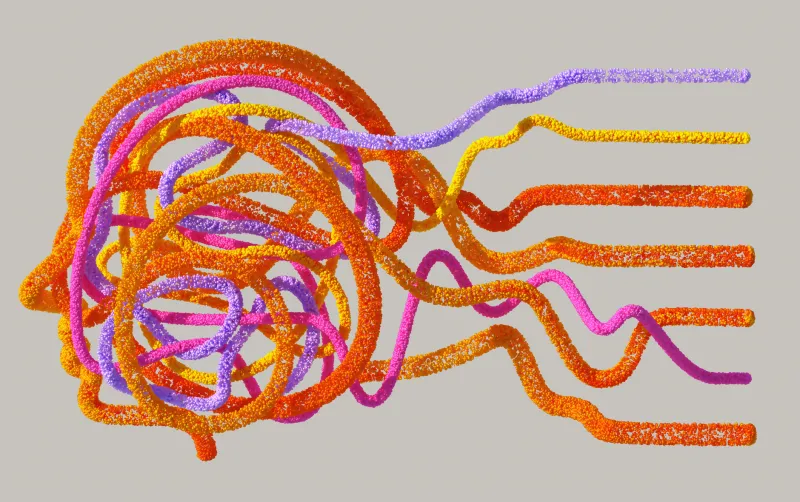
Imagine you're deep in the jungle. You've spotted movement in the same tree three times in a row. Your instincts fire: there's something there, and it's going to happen again. That's exactly the kind of wiring that kept your ancestors alive — and it's exactly the kind of wiring that will drain your bankroll if you let it run unchecked at the slots or the betting window.
The human brain didn't evolve to understand randomness. It evolved to find patterns. And when you're sitting in front of a slot machine or watching a roulette wheel, that ancient hardware doesn't shut off just because you're playing a game governed by math and probability. Instead, it starts drawing maps through a wilderness that has no trails.
The Streak That Wasn't
Here's how it usually goes. You hit three solid wins in a row on a slot. Maybe you've been running hot at the blackjack table for the last twenty minutes. Your brain quietly starts building a narrative: this machine is hot, I'm in a groove, something is clicking. The wins feel connected. They feel like evidence.
They aren't.
In probability, independent events don't remember each other. A slot machine's RNG (random number generator) doesn't know you just hit a bonus round. The roulette ball has zero memory of where it landed on the last spin. But your brain — brilliant, relentless, deeply unhelpful in this context — stitches those separate events into a story with a beginning, a middle, and an expected ending.
Psychologists call this the clustering illusion. It's the tendency to see meaningful patterns in data that is actually random. And in a gaming environment, where wins and losses come fast and the stakes are real, the clustering illusion can feel absolutely convincing.
Recency Bias: The Freshest Lie Your Brain Tells You
Recency bias is the cognitive tendency to weigh recent events more heavily than older ones. In everyday life, this is mostly harmless. In the casino, it's a trap with teeth.
After a few consecutive wins, recency bias inflates your confidence. The most recent events — the wins — feel more real and more representative than the full history of your session. You start unconsciously thinking, this is what my luck looks like right now. You might even increase your bet size because the recent evidence seems to support it.
Then the streak ends, as streaks always do. And because you've been scaling up, the crash hits harder than the wins ever built you up.
The flip side is just as dangerous. After a string of losses, recency bias convinces some players that they're "due" for a win. This is the gambler's fallacy dressed up in different clothes — the belief that randomness self-corrects over short time horizons. It doesn't. The machine doesn't owe you anything. The next spin is exactly as random as the first one you ever played.
Confirmation Bias: Only Counting the Hits
Confirmation bias is recency bias's sneaky cousin. It's the tendency to notice, remember, and emphasize information that confirms what you already believe — while quietly ignoring the evidence that contradicts it.
In gaming, this plays out constantly. You remember the three times you played a particular slot after a cold streak and then hit big. You forget the eleven times you did the same thing and walked away empty. You remember the sports bet you placed on a team coming off back-to-back wins and cashed. You forget the seven times that same logic burned you.
Over time, confirmation bias builds a completely fictional track record in your head. You start to feel like you've cracked something, identified a real edge, found a pattern in the jungle that other players are missing. But the pattern only exists because you've been selectively keeping score.
The fix isn't complicated, but it does require some discipline: keep actual records. Write down every session, every bet, every outcome. When you force yourself to track everything — not just the memorable wins — the phantom patterns tend to disappear fast.
What a Real Edge Actually Looks Like
None of this means edges don't exist. They do. But they look very different from a hot streak at the slots.
Real edges in gaming are usually structural. They come from things like understanding pay table variance before you choose a slot machine, knowing when to take insurance in blackjack based on the actual count, or identifying line movement in sports betting that reflects sharp money rather than public sentiment. These aren't feelings. They're frameworks built on math, research, and repeatable logic.
The gut feeling that you're on a roll? That's not an edge. That's your brain pattern-matching in a random environment. The two things can feel identical in the moment, which is exactly why so many players get burned.
A useful question to ask yourself mid-session: Can I explain why I expect this outcome, in terms that have nothing to do with what just happened? If the only reason you're increasing your bet or staying at a particular machine is because of recent results, you're chasing a ghost.
Staying Sharp in the Jungle
JungliWin is built around the idea that smart play wins over the long run. And smart play starts with knowing your own brain's weaknesses as well as you know the games you're playing.
A few practical habits that help:
Set session limits before you start. Pre-commitment removes the in-the-moment decision-making that bias loves to hijack. If you decide ahead of time that you're playing $100 on slots tonight, a winning streak doesn't change that number upward — and neither does a losing one.
Take breaks at natural stopping points. Streaks — good and bad — feel most convincing when you're deep in a session with no pause. Stepping away for five minutes resets your frame of reference and makes it easier to evaluate your situation objectively.
Separate emotion from decision. Excitement after a win and frustration after a loss are both states in which your cognitive biases are loudest. Neither is a good time to make a bet-sizing decision.
Look for structural reasons, not recent results. Before any meaningful bet, ask yourself whether you have a logic-based reason for it that existed before the last few outcomes. If not, you might just be following a trail that leads nowhere.
The jungle is full of mirages. Beautiful, convincing, completely empty. The players who last out here are the ones who learn to tell the difference between a real trail and a pattern their own mind painted on the trees.